
Comparison
Nano Banana vs Grok Image Generator: The Complete Comparison
Short answer: Nano Banana is not inside Grok. Google and xAI build separate image model families with different architectures, different tools, and different strengths. This guide covers everything — the naming confusion, a full side-by-side comparison, the built-in tool ecosystem, and a practical guide to picking the right one for your work.
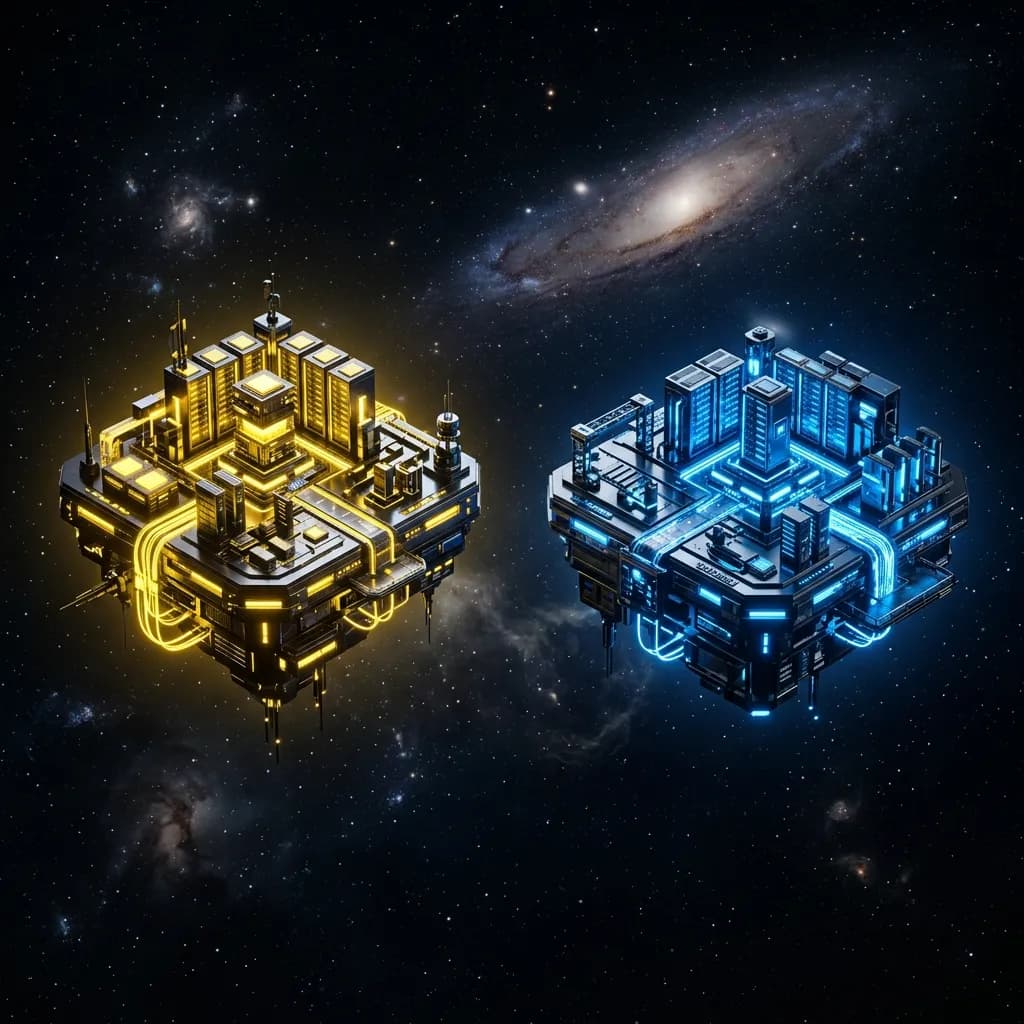
Is Nano Banana Available in Grok? The Direct Answer
No. Nano Banana is not available in Grok. This is the single most searched question about these two platforms, and the answer is straightforward: they are built by different companies, run on different infrastructure, and share no official technology.
Nano Banana is the codename for Google's native image generation family, built on Gemini infrastructure. The name originated as an internal project codename and was publicly discovered when the model appeared on LMArena benchmarks before its official August 2025 launch.
Grok Imagine is xAI's image generation engine, powered by Aurora — an autoregressive mixture-of-experts model that predicts tokens from interleaved text and image data. It was introduced in December 2024 and is integrated into the X (formerly Twitter) platform. You can also use Grok Image generation directly on Nano Banana to compare both workflows side by side.
No official xAI documentation references Nano Banana. No official Google documentation references Aurora or Grok Imagine. Until either company says otherwise, they are completely separate ecosystems.
If you want to understand the
Nano Banana model family in detail
, we have a dedicated guide that explains all three models and the full tool suite.
Two Companies, Two Model Families
The confusion is understandable. Both platforms generate images from text, both launched upgrades in the same window, and both appear in the same comparison threads. But the technology is fundamentally different.
Google's side includes three models in one family:
Nano Banana
(Gemini 2.5 Flash Image, released August 2025 — optimized for speed and fast iteration),
Nano Banana Pro
(Gemini 3 Pro Image, released November 2025 — built for professional precision, advanced reasoning, and high-fidelity text rendering), and
Nano Banana 2
(Gemini 3.1 Flash Image, released February 2026 — Pro-level capability at Flash speed). All three run on Gemini infrastructure and include Google's SynthID watermarking.
xAI's side centers on Aurora, an autoregressive MoE network. Unlike diffusion-based models, Aurora predicts image tokens sequentially, which gives it particular strength in compositional control and cinematic rendering. It powers Grok Imagine within the X platform, with a newer Quality mode introduced in April 2026 for higher-fidelity outputs at the cost of speed.
Full Side-by-Side Comparison
We reviewed official Google and xAI documentation as of April 2026. Where we recommend one platform over another, that is editorial judgment, not a vendor claim.
| Dimension | Nano Banana (Google) | Grok Imagine (xAI) |
|---|---|---|
| Model names | Nano Banana, Nano Banana Pro, Nano Banana 2 | Aurora, Grok Imagine |
| Architecture | Gemini multimodal (native image in LLM) | Autoregressive mixture-of-experts |
| Model tiers | 3 tiers (Flash → Pro → Balanced) | Standard + Quality mode |
| Text-to-image | Yes, across all models | Yes |
| Image editing | Native in-context editing | Natural-language photo editing |
| Text rendering in images | Strong (especially Pro) | Capable |
| Character consistency | Up to 5 characters (NB2) | Not officially documented |
| Max resolution | Up to 4K | Not publicly benchmarked |
| Built-in tools | Face swap, upscaler, background removal, watermark remover, Ghibli style, image captioner | Image-to-video, editing within X |
| Primary platform | Gemini App, Google AI Studio, Vertex AI | X (Twitter) |
| API access | Gemini API + Vertex AI | xAI Imagine API |
| AI watermark | SynthID (Google) | Not publicly documented |
When Nano Banana Is the Stronger Choice
Nano Banana makes more sense when your workflow demands structured image generation with built-in editing tools. Here is where the advantage shows up in practice:
Professional portraits and headshots. Nano Banana Pro and Nano Banana 2 provide multi-tier model selection that lets you trade between speed and fidelity. The
style gallery
includes prebuilt workflows for
LinkedIn-style business photos
,
cinematic studio portraits
, and creative filters like the
AI celebrity look-alike finder
.
Product photography and brand assets. Complex prompts with strict layout requirements, typography, and brand consistency are where Nano Banana Pro excels. The
contextual product photography
use case shows what this looks like in practice.
Creative exploration with iteration. The speed-first design of the original Nano Banana model is built for rapid prompt testing. Start with five ideas, narrow to two, and refine with the same model family — no platform switching required.
When Grok Makes More Sense
Grok Imagine earns its place when your workflow lives inside the X ecosystem or when you prioritize cinematic drama and fast social content.
Social media content on X. Grok Imagine is natively integrated into X, which means you can generate, share, and iterate without leaving the platform. For rapid social content creation, that integration friction is real.
Cinematic styles and artistic flair. Aurora's autoregressive architecture is often praised for producing visually dramatic, cinematic images. If your primary output is artistic content where raw visual impact matters more than editing control, Grok has genuine strengths.
Video generation. xAI has introduced image-to-video capabilities within the Grok ecosystem. If video is a core part of your workflow, this is worth evaluating independently.
Want to try Grok without leaving Nano Banana? You can access Grok Image generation directly on this site, compare results with Nano Banana models, and decide which fits your use case — all from one interface.
The AI Tools That Make Nano Banana a Full Workflow
One of the biggest differences between the two platforms is not image quality — it is the tool ecosystem. Nano Banana does not just generate images. It offers a complete suite of post-generation tools that eliminate the need to switch between separate apps:
— Swap faces between photos instantly. This is the most-clicked tool on Nano Banana, used for creative portraits, meme generation, and professional photo editing. Upload two images and get a realistic face swap in seconds.
— Upscale any image to 2K, 4K, or 8K resolution with AI enhancement. Essential for printing, professional displays, and rescuing low-resolution source material. The upscaler preserves detail while removing compression artifacts.
— Remove backgrounds from images for product photos, portraits, and transparent PNG downloads. The AI handles complex edges like hair and fur with precision.
— Clean up stock photo watermarks and restore original images automatically.
— Transform any photo into Studio Ghibli-inspired anime art.
— Generate detailed image descriptions for accessibility, social media, and prompt reverse engineering.
Grok does not offer this kind of integrated tool suite. If your workflow involves generating an image, swapping a face, upscaling to 4K, and removing the background — all from one platform — Nano Banana is the only option that handles all four steps.
Real Use Cases That Show the Difference
Model comparisons are abstract. Real images are not. Here are five use cases that show where Nano Banana's multi-model approach shines:
— Product thinking meets character design. The model needs to hold packaging logic, character pose, and material rendering together in a single coherent output.
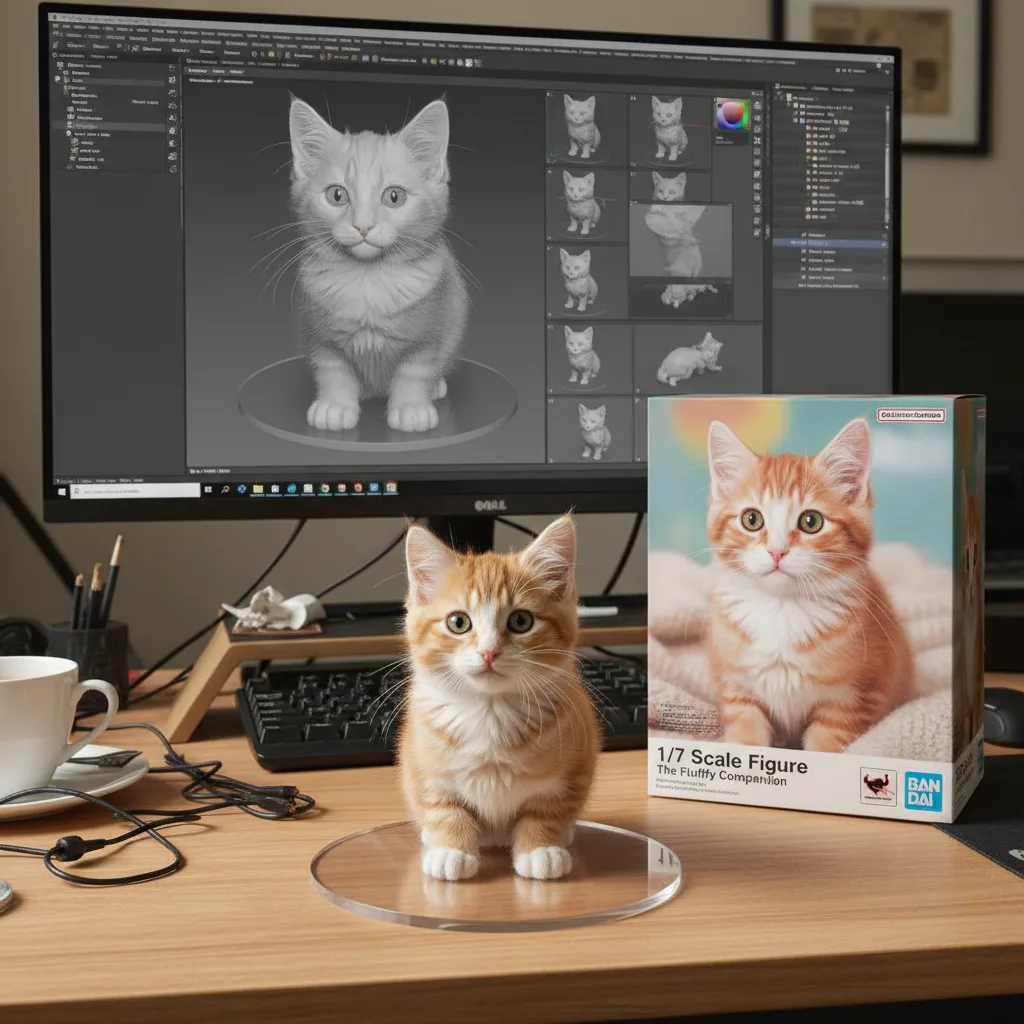
— Material understanding, brand-like shapes, and stylized finish. This is where Pro-level instruction following earns its keep.
— Fun, shareable character transformation. A perfect example of speed-first generation that still looks polished.
Contextual Product Photography
— Place any product into a lifestyle scene with controlled lighting, angle, and environment.
— Photorealistic portrait generation with controlled environment, lighting, and pose direction.
Portrait Styles and Creative Filters
Beyond the core image generation, Nano Banana includes a growing library of one-click portrait transformation styles. These are pre-tuned workflows that eliminate prompt writing entirely:
— Upload a portrait and find your celebrity twin.
Gender Swap
— Transform a portrait into a gender-swapped version.
Age Filter
— Make a photo look older or younger with seven age presets.
Fat Filter
— Preview a heavier-looking version of a portrait.
Smile Filter
— Add a natural smile to a flat-expression portrait.
Natural Beauty Filter
— Soft facial enhancement without identity drift.
None of these require prompt writing. Upload one image. Get the result. The simplicity is the point.
How to Decide in 30 Seconds
Need a complete image workflow with editing tools? Nano Banana. Generation plus face swap, upscaling, background removal, and more — all in one place.
Need quick prompt exploration? Start with
Nano Banana
. It is the fastest path to a first draft.
Need production-ready output? Nano Banana 2
gives you Pro-level control at Flash-level speed.
Need strict typography and complex layouts? Nano Banana Pro
is built for dense briefs.
Already in the X/xAI ecosystem? Grok Imagine delivers strong image generation on its own terms. The comparison only matters if you are still choosing.
Done comparing? Generate something.
The best way to test a model is not another comparison table — it is one real prompt.
Frequently Asked Questions
Is Nano Banana available in Grok?
No. Nano Banana is Google's AI image model family built on Gemini infrastructure. Grok uses xAI's own Aurora model. They are separate products from different companies.
Does Grok use Nano Banana for image generation?
No. Grok's image generation is powered by Aurora, xAI's proprietary autoregressive model. Nano Banana runs on Google's Gemini platform and is not part of the Grok ecosystem.
Which is better for professional image work?
Nano Banana offers a tiered model family with built-in editing tools like face swap, image upscaling to 4K/8K, and background removal. Grok Imagine excels in social content and cinematic styles. The best choice depends on your workflow.
Can I use Nano Banana for free?
Yes. Nano Banana offers a free tier so you can test image generation quality before upgrading. Visit the pricing page for plan details.